Top 10 facts about purple

  1. Purple Day was founded in 2008, by Cassidy Megan, aged nine, of Nova Scotia, Canada.
  2. It’s not true that there’s no word rhyming with purple: there’s curple (a strap on a horse’s saddle), hirple (walk with a limp) and turple (to fall over).
  3. The colour purple originally came from a dye made from mucus glands of a tropical sea snail.
  4. The snail is known as the murex but its Latin name was purpura, which gave us the word purple.
  5. Carrots were once purple, red, white or yellow. Orange carrots were bred by the Dutch in the 16th century to honour the royal House of Orange.

6. The Archbishop of Cyprus is traditionally allowed to sign official papers in purple ink.

7. Purple is the colour for epilepsy awareness because of the association with lavender, which is a traditional herbal treatment for the disease.

8. The film The Color Purple (1985) received 11 Oscar nominations without winning a single award.

9. Purple Rain (1984) won the only Oscar for which it was nominated: best original song score.

10. The date for Purple Day is enshrined in Canadian Law under the Purple Day Act that was passed in 2012.

History of Color Purple Associated With Royalty

The color purple has been associated with royalty, power and wealth for centuries. In fact, Queen Elizabeth I forbad anyone except close members of the royal family to wear it. Purple’s elite status stems from the rarity and cost of the dye originally used to produce it.

Purple fabric used to be so outrageously expensive that only rulers could afford it. The dye initially used to make purple came from the Phoenician trading city of Tyre, which is now in modern-day Lebanon. Fabric traders obtained the dye from a small mollusk that was only found in the Tyre region of the Mediterranean Sea.

A lot of work went into producing the dye, as more than 9,000 mollusks were needed to create just one gram of Tyrian purple. Since only wealthy rulers could afford to buy and wear the color , it became associated with the imperial classes of Rome, Egypt, and Persia. Purple also came to represent spirituality and holiness because the ancient emperors, kings and queens that wore the color were often thought of as gods or descendents of the gods.

Sometimes, however, the dye was too expensive even for royalty. Third-century Roman emperor Aurelian famously wouldn’t allow his wife to buy a shawl made from Tyrian purple silk because it literally cost its weight in gold. Talk about sticker shock.

Purple’s exclusivity carried over to the Elizabethan era (1558 to 1603), during which time everyone in England had to abide by Sumptuary Laws, which strictly regulated what colors, fabrics and clothes could and couldn’t be worn by different classes within English society. Queen Elizabeth I’s Sumptuary Laws forbid anyone but close relatives of the royal family to wear purple, so the color not only reflected the wearer’s wealth but also their regal status .

The hue became more accessible to lower classes about a century and a half ago. In 1856, 18-year-old English chemist William Henry Perkin accidently created a synthetic purple compound while attempting to synthesize quinine, an anti-malaria drug . He noticed that the compound could be used to dye fabrics, so he patented the dye and manufactured it under the name aniline purple and Tyrian purple, making a fortune in the process.

The color’s name was later changed to “mauve” in 1859, based on the French name for the purple mallow flower, with chemists calling the dye compound mauveine. And that’s how the elite royal color became widely available and affordable thanks to a young scientist’s serendipitous experiment.
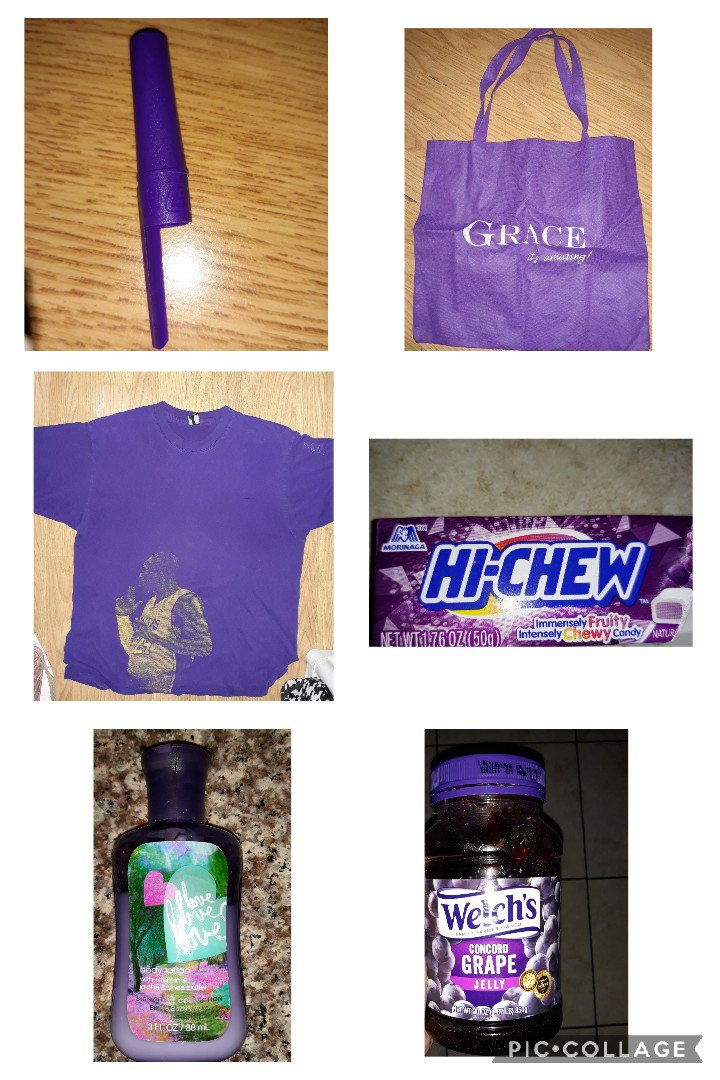

6 colors of my Things

My purple color things

1. Purple Day was founded in 2008, by Cassidy Megan, aged nine, of Nova Scotia, Canada.

2. It’s not true that there’s no word rhyming with purple: there’s curple (a strap on a horse’s saddle), hirple (walk with a limp) and turple (to fall over).

3. The colour purple originally came from a dye made from mucus glands of a tropical sea snail.

4. The snail is known as the murex but its Latin name was purpura, which gave us the word purple.

5. Carrots were once purple, red, white or yellow. Orange carrots were bred by the Dutch in the 16th century to honour the royal House of Orange.

6. The Archbishop of Cyprus is traditionally allowed to sign official papers in purple ink.

7. Purple is the colour for epilepsy awareness because of the association with lavender, which is a traditional herbal treatment for the disease.

8. The film The Color Purple (1985) received 11 Oscar nominations without winning a single award.

9. Purple Rain (1984) won the only Oscar for which it was nominated: best original song score.

10. The date for Purple Day is enshrined in Canadian Law under the Purple Day Act that was passed in 2012.

Haiku Poem

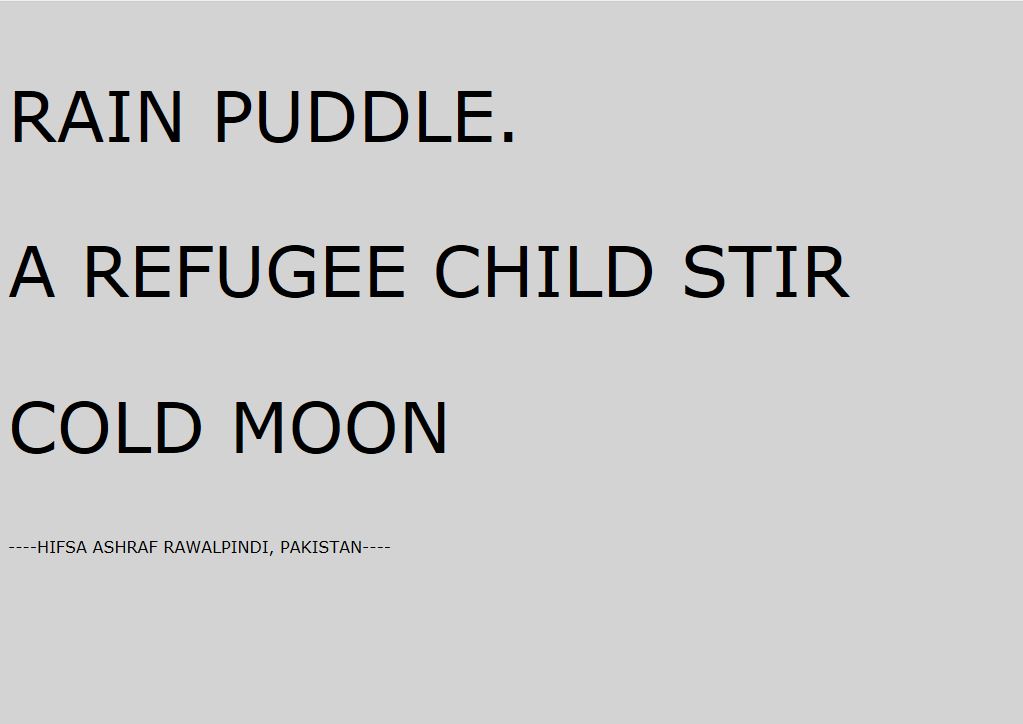
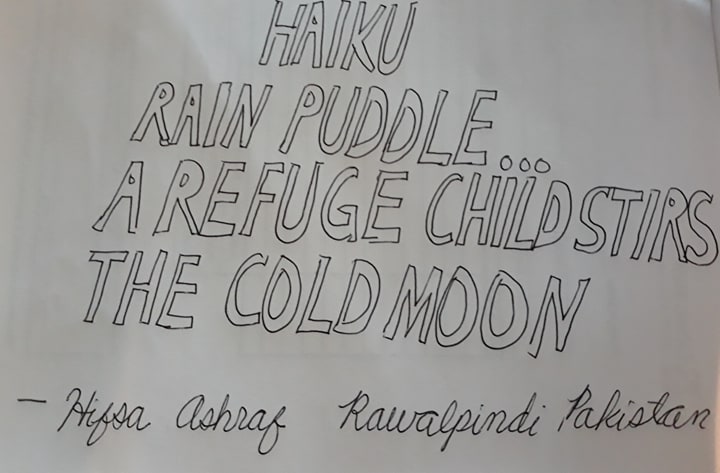
rain puddle . . .

a refugee child stirs

the cold moon

-Hifsa Ashraf Rawalpindi, Pakistan

  1. I making wrote the haiku poem about the story.
  2. it also reach to create the type fonts
  3. How I make nice my drawing sketch so, I create my pen fonts sign.

The poet is not famous I can’t find research on them. A little children goes to another place with his family. A rain puddle it looks shower when people using umbrella. This is meaning a refugee children nearly half of all refugees are children, and almost one in three children living outside their country of birth is a refugee. Even the children comes from middle east. The cold moon is someone far away watching. I think she talking about people wealthy country who see the refugee don’t help them.

Design a site like this with WordPress.com
Get started